

Understanding apple decline in British Columbia
Introduction
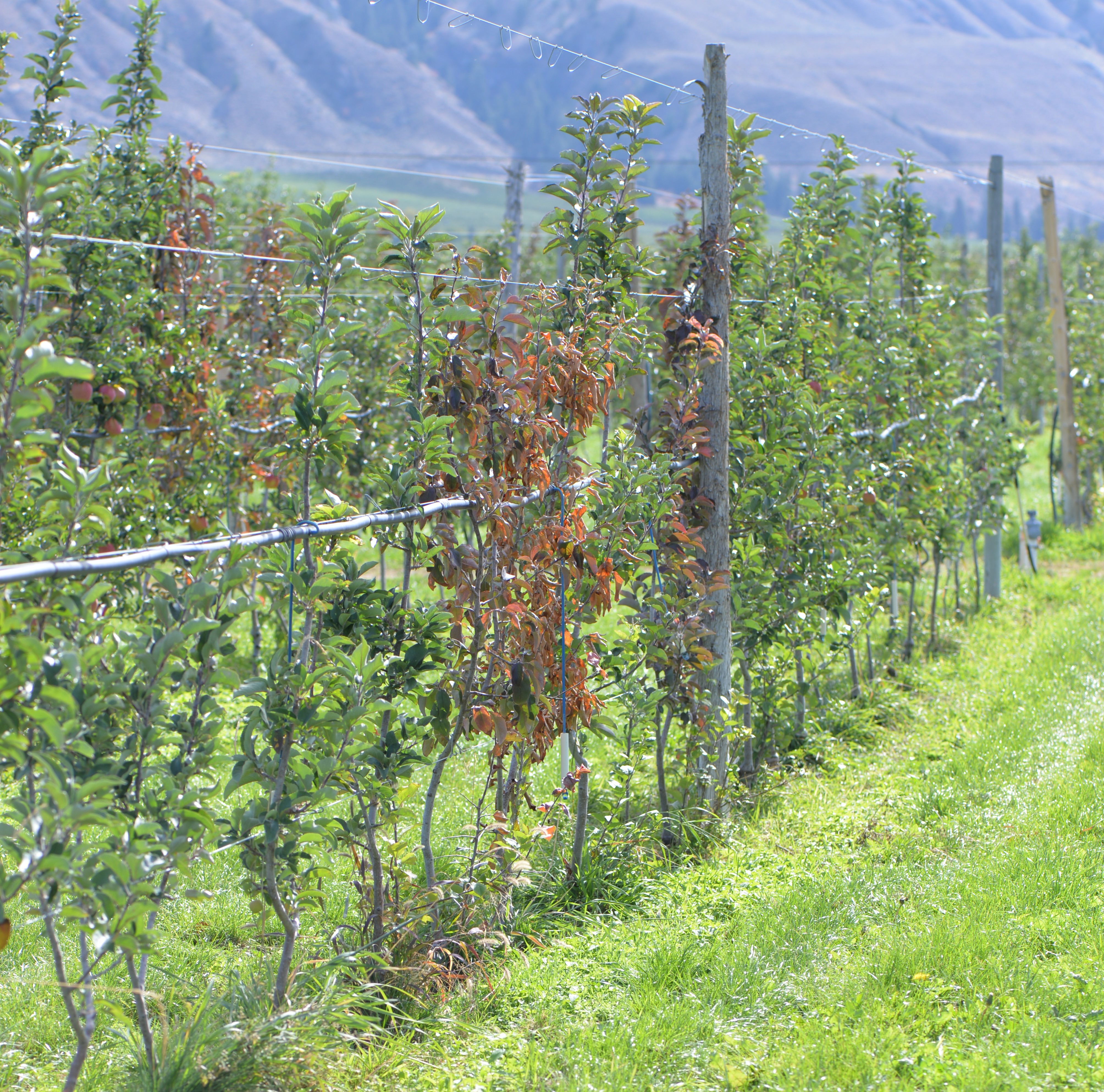
Apple decline is a phenomenon where healthy apple trees suddenly lose vigour, collapse, and die over a 1–3-week period. It was first widely reported in British Columbia in 2018, when growers in the Okanagan and Similkameen valleys saw tree losses in young, high‑density orchards.
Apple decline does not affect all trees evenly. Growers may see patches of declining trees beside healthy ones, which can make orchard management and replant decisions difficult. For example, areas with dead or removed trees may still receive water and nutrients, leading to wasted inputs and added costs. Managing young replacement trees alongside mature trees can also be challenging, as they have different water and nutrient needs within the same irrigation and fertigation system. Apple decline can have a major financial impact, as replanted trees can take four years to produce fruit.
Researchers at Agriculture and Agri‑Food Canada’s Summerland Research and Development Centre, along with collaborators around Canada, are working to understand the mechanisms and stressors that lead to decline. This factsheet outlines what is currently known about apple decline, how to recognize it in the orchard, possible contributing factors, and potential steps growers can take to reduce risk while research continues.
About this brief
This brief was prepared by Nisa Chavez from the BC Food Web team, with the help of Jesse MacDonald and Hao Xu, and is based on the following scientific journal articles:
- Xiao, H., Hao, W., Storoschuk, G., MacDonald, J. L., & Sanfaçon, H. (2022). Characterizing the virome of apple orchards affected by rapid decline in the Okanagan and Similkameen valleys of British Columbia (Canada). Pathogens (Basel), 11(11), 1231. https://doi.org/10.3390/pathogens11111231.
- Xu, H., Hannam, K. D., MacDonald, J. L., & Ediger, D. (2023). Field investigation into tree fates from recent apple tree decline: Abrupt hydraulic failure versus gradual hydraulic loss. Stresses, 3(1), 256-269. https://doi.org/10.3390/stresses3010019.
Key Findings
Apple decline is a complex issue affecting orchards in BC. While the exact cause remains unknown, multiple stressors that can affect water and nutrient movement through the tree appear to contribute to decline. Some key insights are:
- Symptoms can include weak growth, cankers near the graft union, bark cracking, leaf yellowing or wilting, early leaf drop, and sudden tree collapse.
- Drought, winter injury, apple clearwing moth, canker-causing fungi, and other stressors can damage the graft union and restrict the movement of water and nutrients within the tree and lead to collapse.
- Maintaining balanced soil moisture, protecting graft unions, and managing insect and disease pressures can help support tree health while research continues on apple declines causes.