

Biochar for dairy manure: What it is and how it’s used
Introduction
Biochar is a stable, charcoal-like material produced by heating agricultural or forestry wastes at high temperatures in low-oxygen conditions. It is carbon-rich, highly porous, and extremely durable. These properties allow biochar to absorb and retain water, nutrients, and gases, making it well suited for use as a soil amendment. When applied to agricultural fields, biochar can improve soil structure and fertility while also storing carbon in the ground for hundreds of years.
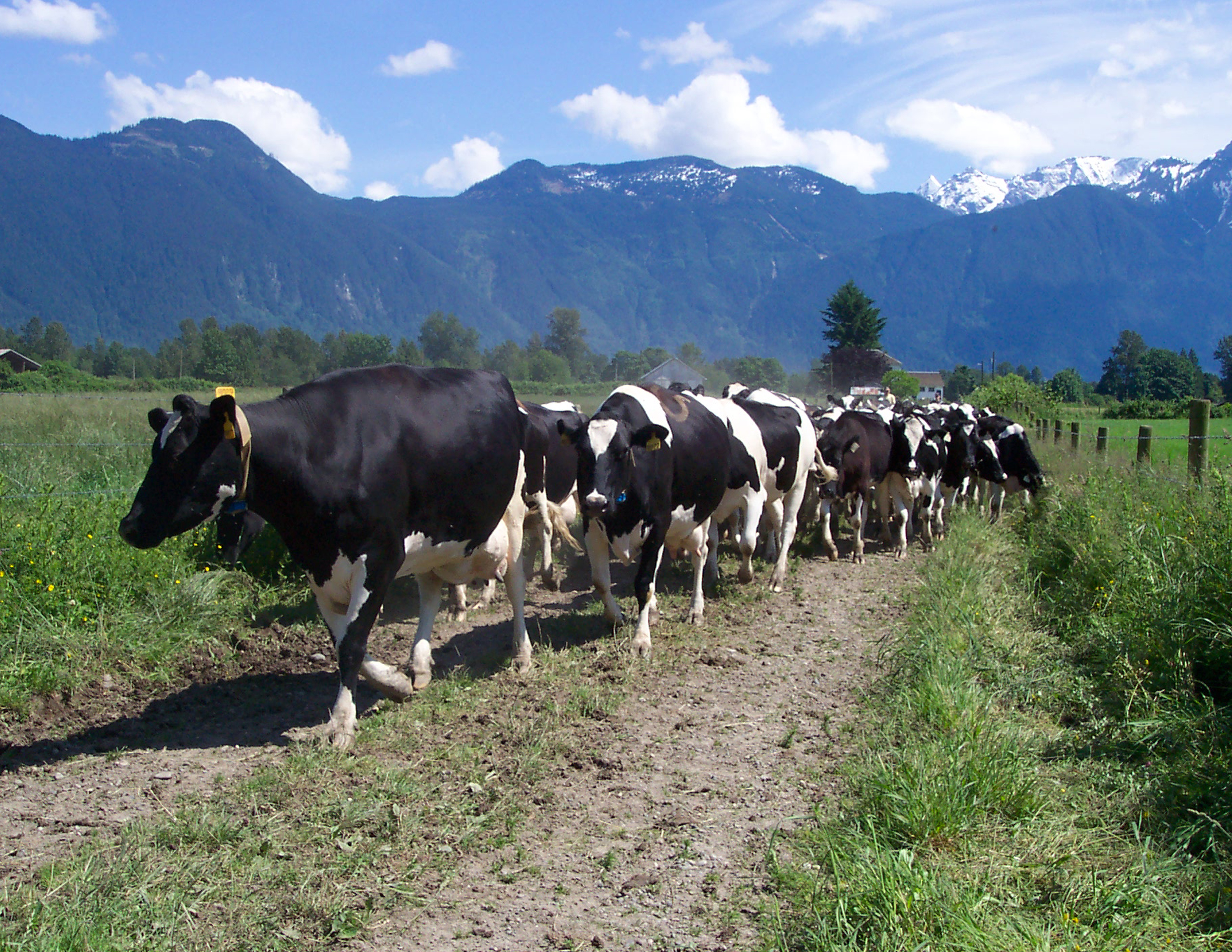
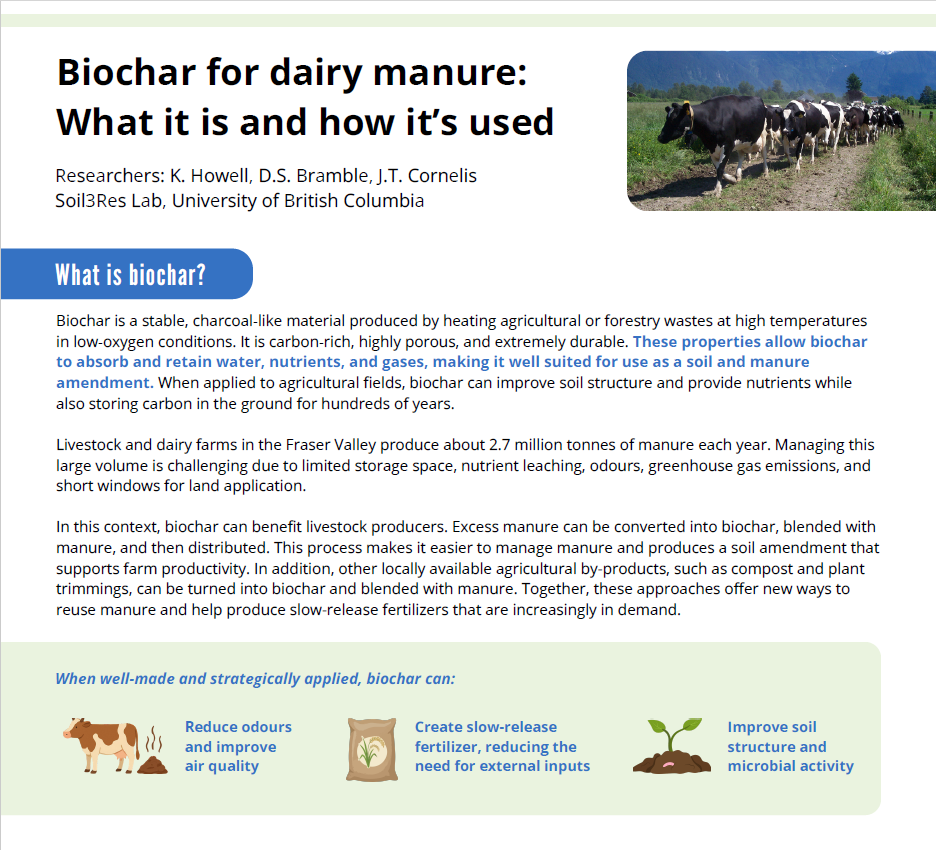
Livestock and dairy farms in the Fraser Valley produce about 2.7 million tonnes of manure each year. Managing this large volume is challenging due to limited storage space, nutrient losses to air and water, odours, greenhouse gas emissions, and short windows for land application.
In this context, biochar can benefit livestock producers. Excess manure can be converted into biochar and distributed, making it easier to manage while also producing a soil amendment that supports farm productivity. In addition, other locally available agricultural by‑products, such as compost and plant trimmings, can be turned into biochar and blended with manure. Together, these approaches offer new ways to reuse manure and help produce slow‑release fertilizers that are increasingly in demand.
About this Factsheet
This factsheet was prepared by Nisa Chavez and Love-Ese Chile from the BC Food Web team, with the help of Karyna Howell and De Shorn Bramble, and is based on the following academic report:
- Smith, K. (2025). Implementing Biochar in the Fraser Valley. Final report. SoilRes3 Faculty of Land and Food Systems at The University of British Columbia. https://bcfoodweb.ca/sites/default/files/2026-04/Biochar-Report-Smith-K-2025.pdf