

Improving Farm Profitability and Reducing Greenhouse Gas Emissions with 4R Nutrient Stewardship
Introduction
The 4R Nutrient Stewardship framework — Right source, Right rate, Right time, and Right place — provides an approach to improving nitrogen use efficiency (NUE) while optimizing yield and minimizing environmental impacts. By minimizing nitrogen (N) losses, it also serves as an effective emissions reduction strategy.
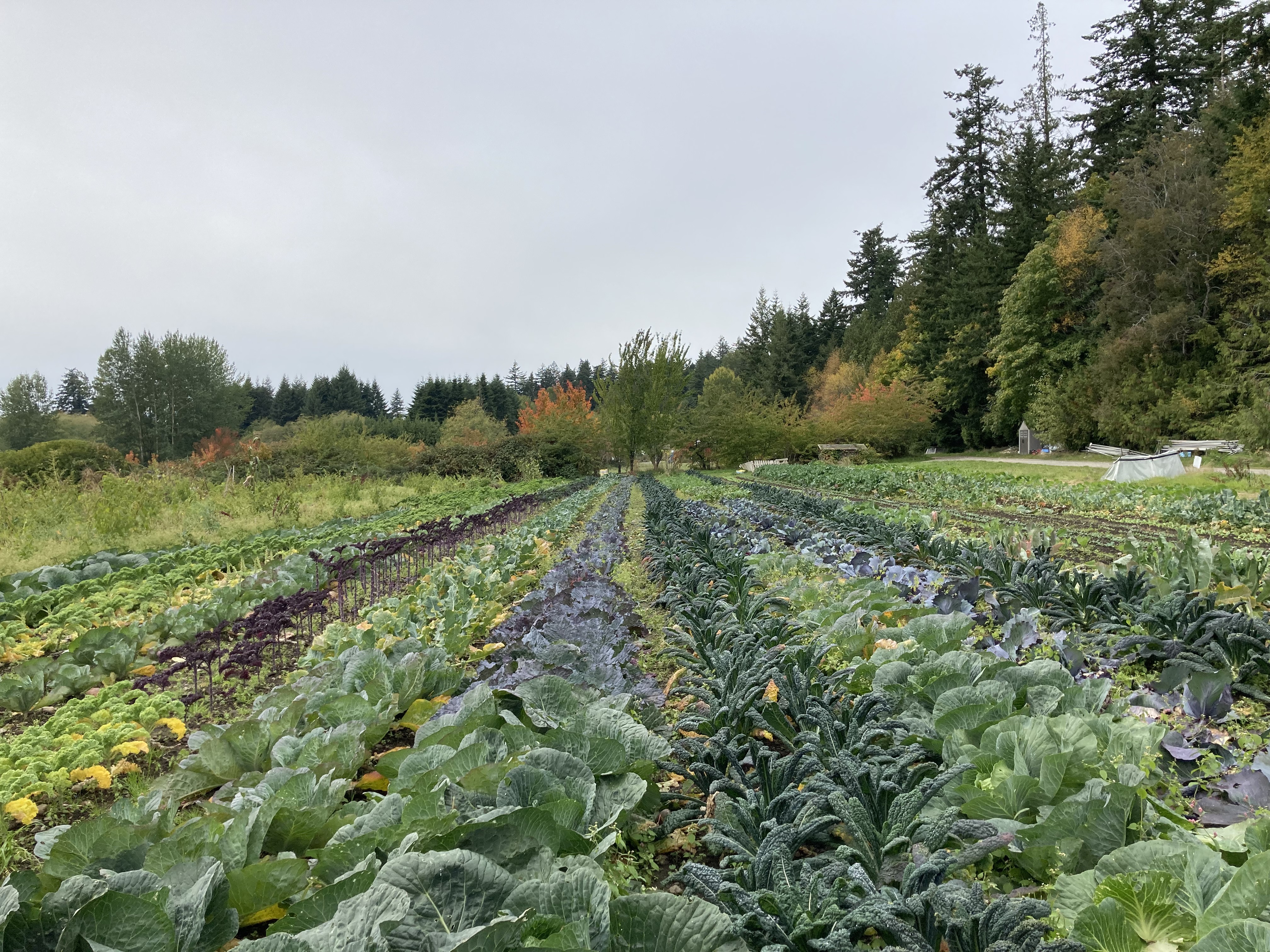
In Canada, widespread adoption of these practices could reduce GHG emissions by 6.3 million tonnes of CO2 equivalents annually by 2030, contributing 3% toward the national Paris Accord target. While applicable across diverse agricultural settings, this brief focuses on implementing the 4R’s in intensive vegetable production systems, where overapplication and N loss are common due to shallow-rooted crops, high N demand over short periods, and frequent irrigation, which can contribute to significant N loss. Further contributing to these issues, limited data on nutrient application rates reduces the capacity to make informed recommendations that maximize yields while minimizing environmental losses. For these reasons, 4R Nutrient Stewardship is a key approach to minimizing N loss, improving farm profitability, and mitigating GHG emissions.
About the Factsheet
This brief was prepared by Caitie Ciampaglia from the Sustainable Agricultural Landscapes Lab in the Faculty of Land and Food Systems at the University of British Columbia, and is based off the following government sources and scientific journals articles:
- Bruulsema, T. (2022). Nutrient stewardship: Taking 4R further. Crops & Soils, 55(1), 34-40.
- Ministry of Agriculture of British Columbia. (January 23, 2024). Nutrient Management. Retrieved on June 10th, 2025, from https://www2.gov.bc.ca/gov/content/industry/agriculture-seafood/agricultural-land-and-environment/soil-nutrients/nutrient-management
- Van Eerd, L. L. (2010). Use of a nitrogen budget to predict nitrogen losses in processing butternut squash with different nitrogen fertilization strategies. HortScience, 45(11), 1734-1740. Retrieved from, https://atrium.lib.uoguelph.ca/server/api/core/bitstreams/0175b162-3152-4a1c-8491-32da79af6a62/cont…
Key Findings
Considering both the costs and the potential climate and environmental impacts of on-farm nitrogen application, targeted N applications through 4R Stewardship is a key management strategy to reduce GHG emissions and improve farm profitability.